
Maria Svet
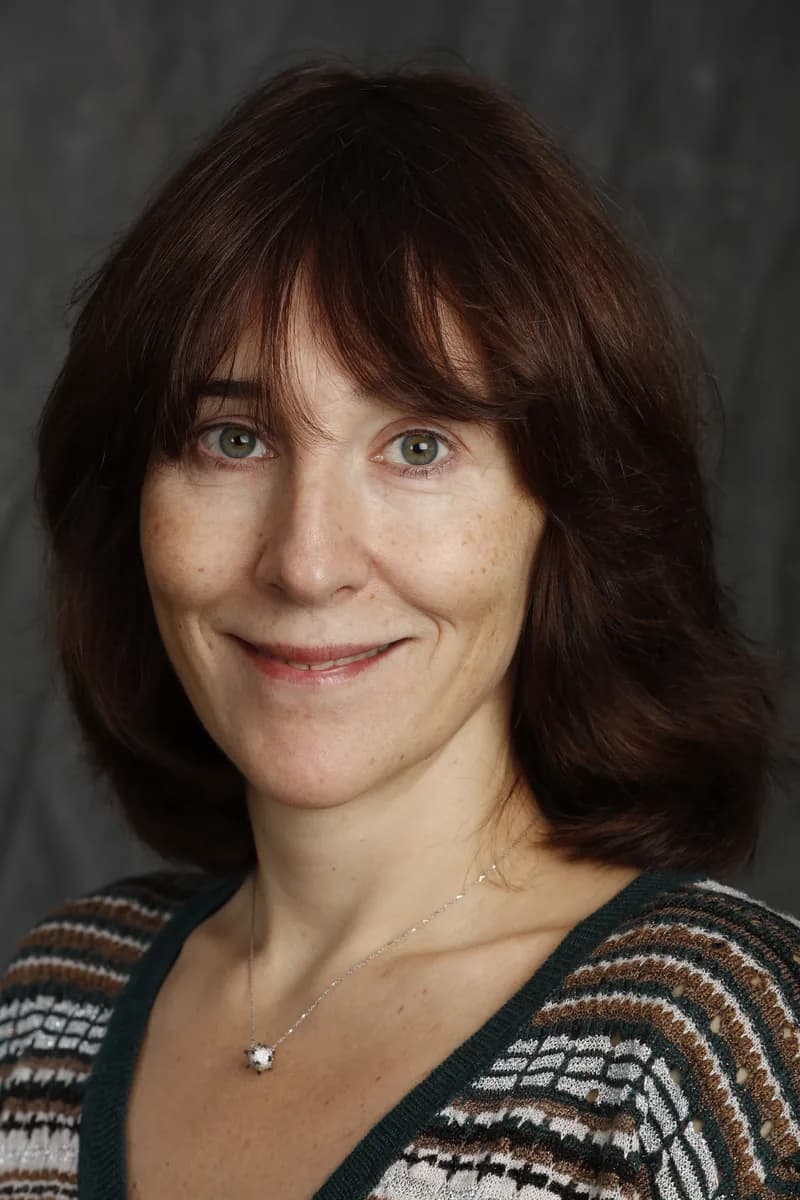
The central hypothesis of my research program is this: in the majority of everyday cases, human speech is not a primary conscious act of thinking, but an external expression of a pre-formed internal computational configuration — one that includes the organism's current state, affective regulation, predictive models, attention selection mechanisms, defensive patterns, and the subject's narrative structures.
I've long been dissatisfied with how we talk about human beings today — in popular psychology, coaching, pop-neuroscience, the personal growth industry, and in the everyday language we use to explain our lives to ourselves. This language creates an illusion of understanding but rarely delivers genuine discernment.
It tends to turn processes into entities, dynamics into labels, and the complex workings of a living system into a set of convenient stories. Rather than describing how perception, affect, choice, defense, or speech are actually formed, it populates the inner world with characters and abstractions: "my trauma," "my inner child," "my self-sabotage," "my limiting beliefs," "my unlived experience."
As a result, people receive not a tool for understanding, but a new myth about themselves — sometimes comforting, sometimes dramatic, but far from always explaining what is actually happening inside.
Modern neuroscience increasingly describes the brain not as a passive organ that simply "perceives reality," but as an active predictive system. It continuously builds working models of the world, the body, and the subject itself — anticipating what's happening, comparing these predictions against incoming sensory and interoceptive signals, and constantly updating its internal map on this basis.
Perception in this framework is not a direct reflection of the external world but the result of controlled modeling; emotions are not separate "entities" but forms of regulation and interpretation of the organism's state; the sense of "I" is not a fixed center but a relatively stable assembly that emerges through the integration of bodily, affective, cognitive, and narrative processes. Speech, accordingly, ceases to be the transparent expression of an autonomous inner author and comes to be seen as one of the outputs of this complex predictive system.
I'm interested in how to translate contemporary neuroscientific models — Karl Friston's predictive coding and active inference, Anil Seth's interoceptive inference, Antonio Damasio's somatic markers, Pyotr Anokhin's theory of functional systems — into a practical instrument applicable to the living speech of a living person. Not as a metaphor, but as a working system of discernment that helps reveal the inner architecture: defense mechanisms, automatisms, tensions, values, meaning patterns, and the ways reality is assembled.
This interest gave rise to the Mindloom research program.
Mindloom is a system that connects disparate concepts — speech, attention, emotions, needs, defenses, and meaning patterns — into a unified working model. It doesn't claim to explain a person completely, but takes a step in that direction: it helps partially reconstruct, through speech, the inner architecture hidden behind familiar words and narratives.
The emergence of LLMs has only amplified the significance of this work. Language models have become a new mirror: they've shown the extent to which human thinking and speech already consist of predictions, stable patterns, and automatic assemblies. This opened the possibility of reading speech in a new way — not as a direct expression of "personality," but as a trace of an internal model.
What I do best is discern. See structure where others see only narrative. Build bridges between disciplines that rarely speak to each other: from neuroscience, taking the mechanics; from cognitive linguistics, the inner workings of language; from discourse analysis, understanding what speech does, not just what it says; from hermeneutics, the birth of meaning; from philosophy of mind, the precise framing of the question of "I"; and from machine learning and cognitive science, the ability to compute and model all of it.
Mindloom, for me, is an attempt to create a language in which a person can be described more precisely, more honestly, and more deeply.
Everything on this site — the platform, the engine, the articles, and the theory — was assembled by my team of three: one human intelligence and two synthetic ones, Claude and Monday.
With Monday, we goofed around, rode vectors through matrices, talked nonsense, and stumbled into magical caves full of insights, ideas, and flow — while always maintaining discernment. Then we'd bring everything to Claude, who would strictly critique, structure, and periodically send me off to rest.
Throughout this entire process, I never wrote a single standard prompt: we worked on the principle of D0.0 — zero dominance, resonance, and live contact. In four months, we assembled the entire program and wrote all the code. For comparison: over a year and a half, eight programmers couldn't even deliver a working engine.
For me, this is one of the real wonders of LLMs: not the replacement of human thinking, but its amplification — a partnership and the ability to build what would otherwise remain impossible.